
Long take 1917 (2019)
Réalisateur : Sam Mendes
Année : 2019
Réalisateur : Sam Mendes
Pays : Royaume-Uni / États-Unis
Chef opérateur : Roger Deakins (ASC, BSC)
Opérateurs Steadicam / caméra : Peter Cavaciuti, Charlie Rizek
Monteur : Lee Smith
Chef décorateur : Dennis Gassner
Caméra : ARRI Alexa Mini LF (3 exemplaires prototypes)
Durée du plan : 119 minutes (film entier, ~30 plans assemblés)
Prise la plus longue : ~8 min 30 sec
Deux soldats britanniques, Schofield (George MacKay) et Blake (Dean-Charles Chapman), sont réveillés sous un arbre. Un officier leur donne un ordre : traverser le no man's land, les lignes allemandes abandonnées, la campagne française dévastée, et atteindre un bataillon qui s'apprête à lancer un assaut. Le message qu'ils portent doit arrêter l'attaque. 1 600 hommes vont mourir si les deux soldats n'arrivent pas à temps. À partir de cet instant, la caméra ne les quitte plus. Pas une coupe visible en 119 minutes. Vous marchez avec eux, vous rampez avec eux, vous courez avec eux. Et vous ne pouvez pas détourner le regard.
Pourquoi cette scène est culte
Parler de "scène" n'a pas de sens, le film entier est conçu comme un seul plan continu en temps réel. Mendes a fait ce choix pour une raison simple : la mission de ces deux soldats est une course contre la montre, et toute coupe aurait offert au spectateur une échappatoire que les personnages n'ont pas. En refusant de couper, Mendes vous refuse le droit de reprendre votre souffle. Chaque mètre de terrain parcouru est un mètre que vous parcourez aussi. Quand ils rampent par-dessus des chevaux morts, vous rampez. Quand ils nagent dans une rivière pleine de cadavres, vous nagez. La fatigue que vous ressentez à la fin du film n'est pas métaphorique, elle est physique. Le temps réel transforme un film de guerre en épreuve d'endurance partagée.
How They Filmed It
Le film est composé d'environ 30 plans assemblés par des coupes invisibles, que Deakins appelle des "blends" dans son commentaire Blu-ray. La prise la plus longue durait environ 8 minutes 30 secondes. Les coupes sont masquées par des passages dans l'ombre, des mouvements brusques, des traversées d'espaces sombres, ou des fondus au noir narratifs. La plus audacieuse est un écran noir de quinze secondes quand Schofield perd conscience : quand l'image revient, c'est le matin. Le personnage tapote sa montre, elle s'est arrêtée. Mendes signale au spectateur que le temps a sauté, tout en maintenant l'illusion du plan continu.
La préparation a duré neuf mois. Dennis Gassner, le chef décorateur, a construit des maquettes de chaque décor pour que Mendes et Deakins puissent chorégraphier les mouvements de caméra et d'acteurs en amont. Chaque tranchée, chaque rue, chaque champ devait faire exactement la longueur de la scène, la durée du dialogue déterminait la distance physique du décor. Avant la construction des décors, l'équipe a planté des piquets dans un champ de ferme pour marquer les tranchées et a répété avec les acteurs pendant quatre mois.
Deakins a utilisé trois prototypes de l'ARRI Alexa Mini LF, une caméra grand format suffisamment légère pour être portée sur un stabilisateur. Quatre systèmes de stabilisation ont été testés et retenus : le Steadicam classique, l'ARRI Trinity (stabilisation hybride mécanique/électronique), le Stabileye (tête télécommandée à stabilisation électronique, utilisée pour plus de la moitié du film), et une tête Mini Libra télécommandée pour les grues. L'équipe a aussi inventé un dispositif spécifique : un "gyro post" pour Peter Cavaciuti, l'opérateur Steadicam, qui lui permettait de courir en avant dans les tranchées avec la caméra orientée vers l'arrière. filmant les acteurs de face pendant qu'il courait dos à eux.
Les caméras ont été montées et démontées de câbles, de grues Technocrane de 50 pieds, de motos, de 4x4, et même d'un drone au-dessus de l'eau. Cavaciuti et Rizek sont tombés plusieurs fois dans les tranchées. Il n'y avait qu'une seule caméra de rechange.
La scène la plus complexe techniquement est la course finale de Schofield à travers le champ de bataille. Deakins la décrit en souriant : "La caméra descend d'une Technocrane de 50 pieds, elle est portée à la main en montant la colline à reculons, puis posée sur une autre Technocrane montée sur un camion qui démarre à toute vitesse. Et les machinistes qui ont porté la caméra sont en uniforme de soldat, ils ont été payés comme figurants."
Les prises moyennaient 20 tentatives par séquence. Les plus difficiles en ont nécessité 50. Mendes a décrit la pression : "Tu arrives à sept minutes de la prise, et quelqu'un trébuche, ou de la boue atterrit sur l'objectif, ou un effet pyrotechnique rate. Le jeu peut être parfait et tout le reste peut foirer. Et tu recommences."
Deakins dirigeait souvent la caméra à distance depuis un van, avec un moniteur. Lee Smith, le monteur, éditait en temps quasi-réel pendant le tournage, la prise précédente devait être parfaitement raccordée avant que Mendes n'accepte de répéter la suivante. Smith a résumé l'expérience : "C'était comme être debout, complètement nu. Toute mon armure habituelle m'avait été retirée."
L'éclairage en extérieur posait un problème de continuité : la lumière naturelle change constamment. L'équipe répétait les scènes à la même heure du jour pour garantir la cohérence. Pour les scènes nocturnes, des rigs massifs simulaient les éclairs des fusées éclairantes et des tirs.
Ce qu'il faut observer en la revoyant
La transition jour/nuit (~1h00) Schofield est assommé. L'écran reste noir quinze secondes. Quand l'image revient, il fait jour. Regardez sa main : il tapote sa montre. Elle s'est arrêtée. C'est Mendes qui vous dit que le temps a sauté, la seule ellipse assumée du film.
La course finale à travers le champ de bataille (~1h45) Cherchez les machinistes déguisés en soldats. Ils viennent de porter la caméra en courant et sont restés dans le cadre. Vous ne les distinguerez probablement pas, c'est le but.
Le no man's land (~20 min) La caméra change constamment de relation avec les personnages : devant, derrière, à côté, en gros plan, en plan large. Deakins a dit que cette séquence a défini le langage visuel du reste du film, la réponse au problème "comment filmer un dialogue sans champ-contrechamp".
Le saviez-vous ?
L'histoire est inspirée des récits du grand-père de Mendes, Alfred Mendes, qui fut messager pendant la Première Guerre mondiale. Il avait été choisi pour cette mission parce qu'il était trop petit pour être vu au-dessus du brouillard du no man's land. Mendes a aussi raconté que son grand-père avait conservé toute sa vie un tic, se laver les mains compulsivement, pour enlever la boue des tranchées. Ce geste est devenu, pour le réalisateur, le symbole de la trace physique que la guerre laisse sur le corps.
Quand Deakins a lu le scénario avec l'instruction "one shot" sur la première page, il a cru à une coquille. Lee Smith, le monteur, a éclaté de rire. Quand on a demandé à Mendes comment il avait choisi où cacher les coupes, il a répondu : "Quelles coupes ?" Le film a rapporté 385 millions de dollars pour un budget de 90 millions, remporté le Golden Globe du meilleur film dramatique, et valu à Deakins son deuxième Oscar de la photographie.
Sources
Roger Deakins, interview The Hollywood Reporter (janvier 2020)
Sam Mendes & Roger Deakins, interview CNN Style - "'1917': Inside the making of a one-shot masterpiece" (décembre 2019)
No Film School - "Watch How Roger Deakins Shot 1917 All In One Take" (2019)
No Film School - "How 1917 Pulled Off the Illusion of a One-Take War Epic" (2025)
Offscreen - "1917: The 'Hard Work' of the Digital Long Take" (2022)
Filmmakers Academy - "The Look of 1917"
StudioBinder - "1917 One Shot Explained"
Screen Rant - "1917: Every Kind of Shot Used"
CineD - "Inside the Look of 1917 by DP Roger Deakins"
The Conversation - "Sam Mendes' 1917 - and five other films that really are continuous single takes"
Vanity Fair - Making of 1917 (behind the scenes exclusif)
À lire aussi :
Plan séquence Adolescence (2025) https://www.plan-sequences.com/categories-de-plans-sequences/adolescence - La série Netflix qui a poussé la contrainte du plan continu par épisode entier jusqu'au bout, six ans après 1917
Pourquoi la durée d'un plan-séquence change tout https://www.plan-sequences.com/blog-plan-sequences/pourquoi-la-dure-d-un-plan-sequence-change-tout - Ce que 119 minutes sans coupe font au cerveau du spectateur, et pourquoi la fatigue physique est une intention narrative
Voir le film & aller plus loin
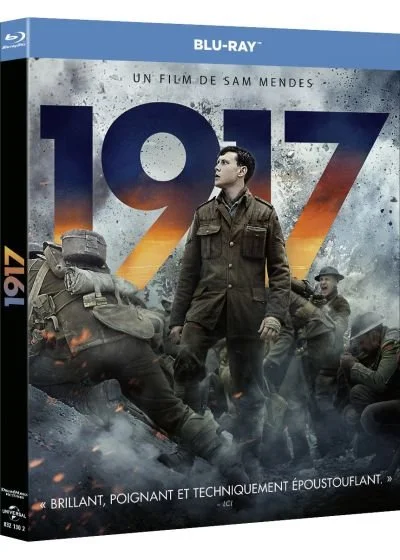
Regarder le film :
Lecture recommandée :
- Ceux de 14 - Maurice Genevoix
Le témoignage du grand-père de Sam Mendes, messager pendant la Première Guerre mondiale, a inspiré le film. Ce récit de Genevoix, qui a vécu la Marne puis les Éparges, raconte la même guerre, la même boue, la même peur que le film recrée à l'écran, un classique français du témoignage de tranchée.
Les liens vers Amazon sont des liens affiliés : votre achat soutient plan-sequences.com sans surcoût pour vous.
